
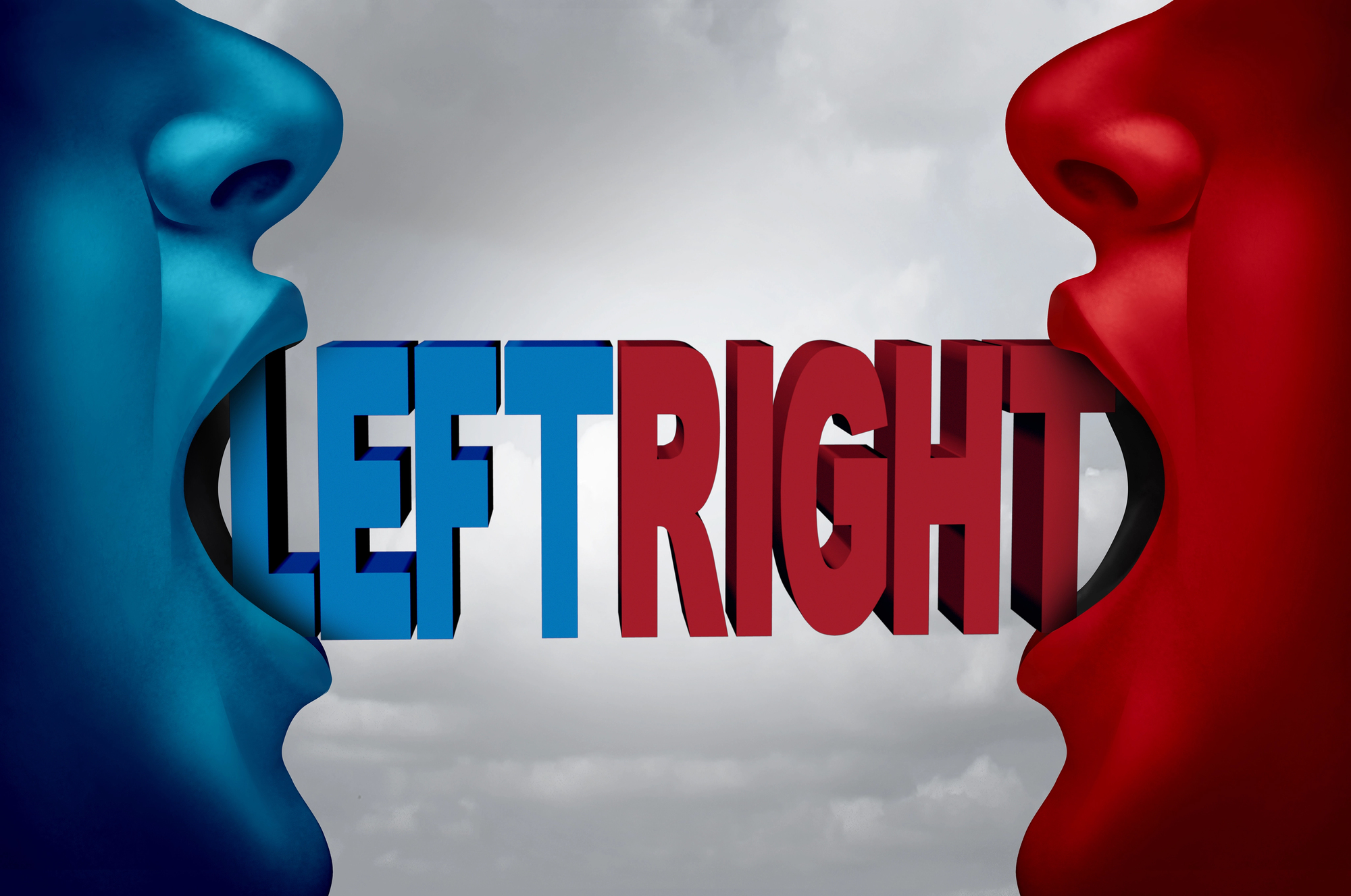

Left and right are shorthand labels for two broad instincts about how society should run. The left tends to place more weight on collective responsibility and an active state that reduces inequality. The right tends to place more weight on individual responsibility, limited state power, and the idea that markets and personal choice deliver better results. Both labels began as literal seating positions in the French revolutionary assemblies, then turned into a global way to describe political arguments.
What left and right really measure
Left and right are not personality types. They are a way to describe answers to recurring questions.
How much inequality is acceptable, and what tools should reduce it?
How much power the state should hold, and what it should fund or run.
How fast social rules should change, and who gets to set them.
What counts as fairness, equal outcomes, equal opportunities, or equal treatment under law?
That is why two people can both call themselves left-wing and still disagree on trade, immigration, or foreign policy. The label points to priorities, not a single rulebook. The same applies on the right, where views can split between free market liberals, social conservatives, and national conservatives.
The left, what it tends to mean in practice
The left usually treats inequality as a problem the state should tackle, not a side effect to tolerate. That does not always mean full state control of the economy. It usually means the state sets stronger guardrails and uses tax and spending to spread opportunity.
Economics and public services
Left-leaning politics often support a larger welfare state. The logic is straightforward.
If health, education, and basic income support depend too heavily on personal wealth, then life outcomes track birth circumstances more than effort. A left approach leans toward public funding and wider access, funded through progressive taxation where higher earners pay a higher share.
That approach often includes stronger worker protections. Think of minimum wage rules, limits on unsafe working practices, collective bargaining support, and enforcement that is funded and staffed enough to matter.
It also tends to support tighter regulation of business where the market creates obvious harm. Environmental rules, consumer protection, competition rules, and safety standards fit here. The state role is not only spending, it is rule-setting and enforcement.
Social change and institutions
On social issues, the left is often associated with reform and expansion of rights. The goal is a society that removes barriers tied to class, race, sex, disability, or sexuality. That often leads to support for anti-discrimination law, equal access policies, and reforms to policing or justice where outcomes show bias.
This is where left politics can feel like constant change to people who value stability. From a left view, slow change keeps unfair systems in place.
The right, what it tends to mean in practice
The right usually starts from the idea that concentrated state power is risky and that social and economic life works better when people keep more of what they earn and make more choices for themselves.
Economics and the size of the state
Right-leaning politics often prioritise lower taxes, lower public spending, and fewer rules on business. The argument runs like this.
Lower taxes leave households with more spending power and firms with more room to invest. Lighter regulation reduces costs and encourages growth. Private provision, such as private pensions, private health cover, and private competition in services, can raise efficiency and choice.
In this view, welfare should exist, yet it should be limited, targeted, and structured to support work and self-reliance. That can mean tighter eligibility rules, shorter durations, or stronger conditions.
Property rights also sit near the centre of right-wing thinking. The idea is that ownership and enterprise drive prosperity, and that policy should protect that base.
Tradition, order, and social stability
On social issues, the right is often linked to caution about rapid change. It tends to value continuity in institutions, family structures, national identity, and law and order. That can lead to tougher positions on crime, border control, or national sovereignty.
This does not always mean opposition to all reform. It often means reform should be slow, tested, and framed around stability rather than transformation.
The centre and why labels often fail
Most voters and many politicians sit in the middle, mixing positions that do not line up neatly.
A person can favour free markets and still want a strong public health system.
A person can support welfare spending and still want tight immigration controls.
A person can support social reform and still want tougher sentencing.
This is why left and right are best used as starting points. They help you predict which trade offs a party will accept under pressure. They do not tell you every policy choice in advance.
What left and right mean in the United States
In the United States, the labels map onto party coalitions, yet US politics has its own language. Many Americans use liberal for the left and conservative for the right. US ideology discussions often place the Democratic Party closer to liberal ideas and the Republican Party closer to conservative ideas.
Democrats, typical left leaning priorities in US terms
On economics, Democrats often support a larger social safety net, stronger labour protections, and more regulation in areas such as environment and consumer protection. Healthcare debates show the pattern clearly. The left side of US politics tends to support a larger public role in coverage and funding, even when private insurers remain part of the system.
On social issues, Democrats more often support expanded civil rights protections and reforms linked to equality and inclusion.
Inside the party, there are major differences. Pew research shows multiple groupings with distinct views, from strongly progressive blocs to groups with mixed or moderate positions.
Republicans, typical right leaning priorities in US terms
On economics, Republicans more often support lower taxes, lighter regulation, and a smaller federal role in markets. On welfare and public programmes, the emphasis often shifts toward limits, work requirements, and private provision.
On social issues, Republican coalitions include strong social conservative elements that prioritise tradition, religion, and law and order.
This US mapping still needs caution. A policy that looks left in the US can look centre or even right in parts of Europe, partly due to different baselines in healthcare and welfare.
What left and right mean in the United Kingdom
The UK party system is dominated by Labour and the Conservatives, with government usually formed by the party that wins the most MPs in the House of Commons.
In UK terms, Labour is usually described as centre left and the Conservatives as centre right, with smaller parties positioned around them.
Labour, typical centre left priorities in UK terms
Labour tends to support a larger role for the state in public services and a stronger emphasis on reducing inequality through tax, spending, and regulation. In practice, UK Labour governments still work within a market economy, yet they usually argue for more public funding, more worker protection, and more regulation where markets fail.
Within Labour, internal factions differ on how far the party should go on public ownership, welfare expansion, and tax policy. Those internal splits shape what Labour does in power as much as the left label does.
Conservatives, typical centre right priorities in UK terms
The Conservative Party tradition places weight on private enterprise, property, and lower taxes, plus a focus on order and continuity in institutions. It often argues for lower regulation, a stronger role for private provision, and stricter control of public spending.
The party also contains strands that pull in different directions, from free market liberals to more nationalist and socially conservative wings. That mix influences policy on Europe, immigration, and the state.
Liberal Democrats, Greens, Reform UK and the broader frame
The Liberal Democrats are often positioned in the centre, with social liberal instincts and varying economic positions across time and leadership. The Greens sit further left on climate, regulation, and public investment. Reform UK sits on the right, with emphasis on national sovereignty, immigration restriction, and anti establishment politics.
Those placements move over time, yet the basic left and right logic still helps. When a party prioritises equality through state action, it tends to sit left. When it prioritises individual responsibility, low tax, and tradition, it tends to sit right.
A simple way to read political arguments using left and right
When you hear a policy pitch, translate it into two questions.
Who carries the responsibility: the individual, the market, the state, or a mix?
What trade-off is being accepted: more equality with more state power, or more freedom with less safety net?
That translation trumps slogans. It turns left and right from tribal labels into a tool for reading what a party will do when the easy promises meet tight budgets and real-world constraints.